

In the deepest corners of the internet, far from social media trends and mainstream forums, there exists a website that has puzzled linguists, intelligence analysts, conspiracy researchers, and curious minds for more than a decade. Its name is Forgotten Languages, and its content defies easy explanation. Written in obscure, sometimes apparently invented languages, filled with cryptic diagrams, references to advanced physics, neuroscience, artificial intelligence, and geopolitics, the site has earned a reputation as one of the most mysterious digital artifacts of the modern web.
What exactly is Forgotten Languages? An artistic experiment? A classified research dump? An intelligence agency honeypot? Or something far stranger?
—
What Is Forgotten Languages?
Forgotten Languages is a website that began gaining attention around 2008–2009, though its origins remain unclear. The site publishes long-form texts written in a mix of:
rare real languages,
archaic dialects,
partially recognizable linguistic structures,
and completely unknown scripts.
Some texts resemble constructed languages, while others appear to be heavily obfuscated versions of existing ones. What makes the site particularly unsettling is that the content often discusses highly technical subjects—including quantum mechanics, neuroscience, advanced AI models, cryptography, surveillance systems, and speculative technologies—often with a level of detail that suggests expert knowledge.
The site offers no explanation, no introduction, no author bio, and no clear purpose.
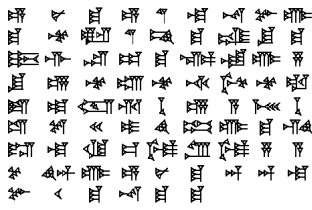
The Language Mystery: Encryption or Obfuscation?
One of the most debated aspects of Forgotten Languages is its use of language itself. Linguists and cryptographers have proposed several theories:
1. Deliberate Linguistic Obfuscation
Some believe the texts are written in real languages that have been intentionally distorted to prevent easy translation. This would allow insiders to communicate while keeping outsiders confused.
2. Constructed Hybrid Languages
Others argue that the site uses hybrid constructed languages, combining grammatical rules from multiple linguistic families. This would make machine translation difficult while remaining readable to a trained human.
3. Semantic Encryption
A more radical theory suggests that the language is only one layer of encryption, and that the real information is hidden in patterns, formatting, references, and repetition.
In this view, the words themselves are less important than how they are arranged.
—
Theories About Who Is Behind It
Theory 1: Intelligence Agencies
One of the most persistent theories is that Forgotten Languages is linked to intelligence communities. Supporters of this theory point to:
recurring references to geopolitics and classified research,
discussions of military-grade AI systems,
terminology resembling defense research documentation,
and writing styles similar to internal analytical reports.
Some speculate connections to NATO-affiliated think tanks or multinational intelligence research groups, though no evidence has ever been confirmed.
—
Theory 2: A Private Research Collective
Another theory suggests Forgotten Languages is the work of a closed academic or technological collective, possibly composed of researchers in AI, neuroscience, and physics who chose to publish their ideas outside traditional academic channels.
The obscure language would act as a filter—ensuring that only those with sufficient background knowledge could understand or engage with the material.
—
Theory 3: An AI Experiment
Perhaps the most unsettling theory is that Forgotten Languages may be partially—or entirely—generated by artificial intelligence.
Some posts appear internally consistent across years, reference earlier content, and demonstrate long-term conceptual continuity. This has led to speculation that the site could be:
an early AI language-generation experiment,
a self-updating knowledge system,
or a human–AI collaborative archive.
Considering the site predates modern large language models, this theory raises uncomfortable questions about how advanced experimental AI may have been years before public disclosure.
—
Theory 4: A Massive Art Project
Skeptics argue that Forgotten Languages is simply an avant-garde conceptual art project—a digital labyrinth designed to provoke obsession, interpretation, and myth-making.
In this reading, the mystery is the point. The lack of answers is intentional, and the community’s attempts to decode the site are part of the artwork itself.
—
Recurring Themes That Fuel Suspicion
Certain themes appear repeatedly across Forgotten Languages texts:
post-human intelligence,
surveillance societies,
neural manipulation,
collective cognition,
the future of human language,
and the decline of traditional communication.
These themes align eerily well with modern anxieties about AI, control, and loss of agency, which makes the site feel almost prophetic.
Recurring Themes That Fuel Suspicion
Certain themes appear repeatedly across Forgotten Languages texts:
post-human intelligence,
surveillance societies,
neural manipulation,
collective cognition,
the future of human language,
and the decline of traditional communication.
These themes align eerily well with modern anxieties about AI, control, and loss of agency, which makes the site feel almost prophetic.
—
Why Forgotten Languages Still Matters
Even after years of analysis, Forgotten Languages remains largely undeciphered. This persistence is part of what makes it so compelling.
In an era where information is instantly accessible and easily translated, Forgotten Languages represents something rare: a space that resists understanding.
Whether it is a classified archive, a philosophical experiment, or a work of digital art, the site challenges assumptions about:
who controls knowledge,
how information is shared,
and whether transparency is always desirable.
—
Conclusion: A Mirror of Our Digital Fears
Forgotten Languages may never be fully explained—and perhaps it was never meant to be. Its true power lies not in what it reveals, but in what it withholds.
It forces us to confront a disturbing idea: that there may exist knowledge systems beyond public comprehension, operating quietly, indefinitely, and without accountability.
In that sense, Forgotten Languages is not just a website.
It is a mirror, reflecting our deepest fears about intelligence, control, and the limits of human understanding in a rapidly evolving technological world.
And maybe that is why, after all these years, it refuses to be forgotten.