

Introduction
While many constructed languages aim to increase precision, expand vocabulary, or improve global communication, Toki Pona takes a radically different path. Instead of asking how much language can express, Toki Pona asks: how little is truly necessary?
Created as an experiment in simplicity, mindfulness, and cognitive clarity, Toki Pona is a minimalist constructed language that challenges modern assumptions about complexity, efficiency, and meaning itself.
—
The Creation of Toki Pona
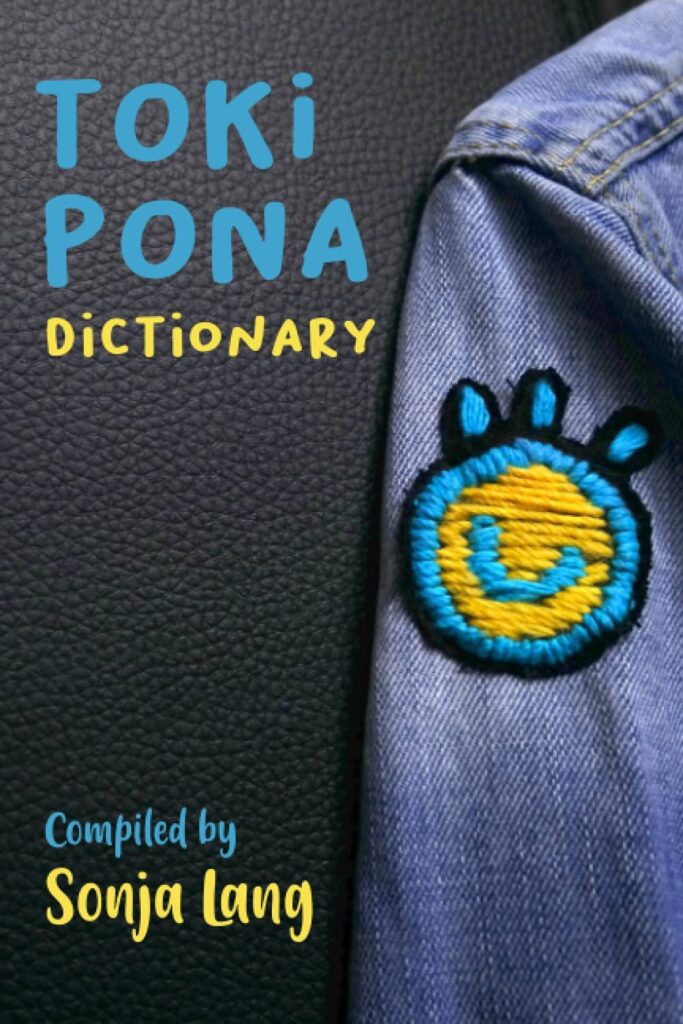
Toki Pona was created in 2001 by Sonja Lang, a Canadian linguist and translator. The language began as a personal project inspired by Taoist philosophy, minimalism, and the desire to simplify thought during periods of depression.
Unlike many constructed languages, Toki Pona was never intended to be universal or logical in a formal sense. Its goal was mental well-being, not optimization.
The name Toki Pona means “good speech” or “simple talk.”
—
Philosophical Foundations
Toki Pona is deeply philosophical. Its core principles include:
1. Simplicity
The language contains only around 120–140 core words, depending on the version. Every concept must be expressed using combinations of these simple elements.
2. Positive Framing
Words are chosen to encourage constructive, non-aggressive thinking. There are no direct words for many abstract or negative concepts.
3. Mindfulness and Cognitive Reduction
By limiting vocabulary, Toki Pona forces speakers to slow down, reflect, and reinterpret experiences in simpler terms.
—
Structure and Grammar
Toki Pona’s grammar is intentionally minimal:
no verb conjugations,
no grammatical gender,
no plural markers,
no tense markers (time is inferred from context or described explicitly).
Words are flexible and can function as nouns, verbs, adjectives, or adverbs depending on context.
For example, suno can mean sun, light, or solar.
—
Semantic Flexibility
The power of Toki Pona lies in semantic recombination.
Complex ideas are expressed through metaphor and composition:
jan pona → friend / good person
telo suli → ocean (big water)
ilo sona → computer (tool of knowledge)
This encourages creative thinking and personal interpretation.
—
Community and Culture
Despite its simplicity, Toki Pona has developed a vibrant global community. It is used in:
online forums,
poetry and music,
philosophical discussion,
educational experiments,
and even casual conversation.
The community emphasizes creativity, kindness, and shared exploration rather than linguistic purity.
—
Writing Systems
Toki Pona has several writing systems:
Latin alphabet (most common),
Sitelen Pona (a logographic script created by Sonja Lang),
various artistic and experimental scripts.
These scripts reinforce the language’s aesthetic and meditative qualities.
—
Toki Pona and Thought
Perhaps the most debated aspect of Toki Pona is its effect on cognition.
Supporters argue that it:
reduces overthinking,
promotes emotional clarity,
simplifies decision-making,
encourages gratitude and presence.
Critics argue that its limitations make it unsuitable for complex discourse.
Both views are valid — and reflect Toki Pona’s purpose.
—
Comparison with Other Conlangs
Language Goal Vocabulary Size Cognitive Style
Esperanto Global communication Large Practical
Lojban Logical clarity Medium Analytical
Ithkuil Maximal precision Huge Extreme
Toki Pona Mental simplicity Very small Mindful
Toki Pona stands apart as a language of intentional limitation.
—
Why Toki Pona Matters
Toki Pona matters not because of what it can express, but because of what it chooses not to express.
It serves as:
a critique of linguistic excess,
an experiment in cognitive minimalism,
a reminder that meaning does not require complexity.
In a world saturated with information, Toki Pona offers silence, simplicity, and reflection.
—
Conclusion
Toki Pona is not a language for efficiency, commerce, or power. It is a language for clarity, calm, and conscious thought.
It asks a profound question: What remains when language is stripped to its essence?
In answering that question, Toki Pona has earned its place as one of the most unique and meaningful constructed languages ever created.